Client: Food processing enterprise, Ghana
Production Line: Fully-automatic Toast Bread Production Line
Capacity: 2,000-2,500 pcs/hour
Solutions Provider: IMAR Equipment
Client Challenges
Prior to our collaboration, the client faced two core pain points that severely restricted production efficiency and product competitiveness:First, low production efficiency. The semi-automatic production line relied heavily on manual labor for key processes such as dough shaping, mold loading, demolding, and product sorting. This discontinuous workflow often led to delays due to human fatigue, operational errors, and high staff turnover—a common issue in Ghana's labor market. The client'sdaily output was only 8000 loaves of toast bread, far below the market demand. Additionally, high labor costs in Accra (accounting for 37% of total production expenses) further squeezed the company's profit margins.
Second, uneven product color. The root cause was the outdated electric oven in the existing setup. The traditional oven featured uneven heat distribution, resulting in inconsistent baking temperatures across the oven cavity. Some toast loaves had overly dark, slightly burnt surfaces, while others were pale and underbaked. The defect rate due to uneven color reached 12%, wasting raw materials (mainly wheat flour) and damaging the company's brand reputation.
Furthermore, the old equipment had high energy consumption (122 kWh per 1,000 loaves) and frequent breakdowns. Ghana's occasional power supply instability exacerbated equipment malfunctions, and each maintenance cycle took 2–3 days, further reducing effective production time. The client urgently needed a high-performance, energy-efficient, and stable automated production line tailored to Ghana’s local conditions to address these issues and seize market opportunities.
Customized Solution: Full-Automatic Toast Production Line
After in-depth discussions with the client and on-site inspections of their Accra workshop, we customized a full-automatic toast bread production line tailored to Ghana’s specific conditions—including voltage stability, raw material characteristics (local wheat flour quality), climate, and the client’s production needs. The core advantages of the production line and its targeted solutions to the client's pain points are as follows:
1 High Automation Level to Boost Efficiency and Cut Labor Costs
The production line achieves full-process automation from dough mixing, shaping, proofing, baking, demolding, cooling to final packaging. No manual intervention is required except for equipment monitoring and raw material refilling. We integrated advanced PLC control systems and high-reliability servo motors to ensure the continuity and stability of each production stage. Key automated modules include:
- Automatic dough mixer: Equipped with a high-speed mixing paddle and intelligent temperature control, it completes dough mixing in 8.5 minutes—30% faster than the client’s old equipment—while maintaining uniform dough texture, even with local wheat flour variations.
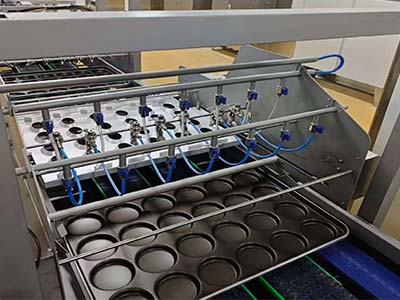
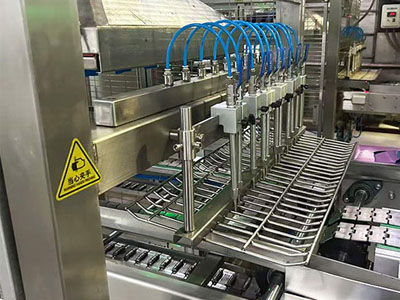
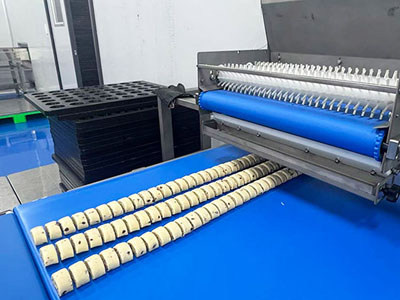
- Automatic shaping and mold-loading system: Precisely forms dough into standard toast loaves and automatically loads them into baking molds, with an error rate of less than 0.5%, eliminating manual shaping errors.
- Automatic demolding and cooling line: Post-baking, toast loaves are automatically demolded and conveyed to an intelligent cooling tower. This eliminates the need for manual demolding—a process that previously required 5 workers to complete 8 hours a day—and ensures seamless connection between baking and cooling.
2.Precision Baking Technology to Resolve Uneven Color Issues
To address the core problem of uneven toast color, we adopted baking tunnel oven with precise temperature control technology. Key improvements include:
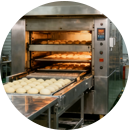
- Uniform heat distribution: Our direct-fired radiant tunnel oven is a core equipment for bread production lines, boasting precise temperature control (±1℃ accuracy) to ensure uniform heat distribution. It delivers consistent, golden-brown bread with perfect color uniformity, enhancing product appearance and quality. With efficient radiant heating, it shortens baking time while retaining moisture and texture, boosting production efficiency. Suitable for various bread types, it offers stable performance for mass production, meeting the strict demands of food manufacturers for reliability and consistency in international markets.
- Intelligent temperature and time control: The PLC system automatically adjusts baking temperature and time based on toast loaf thickness and weight. The client can store multiple sets of baking parameters for different product specifications, guaranteeing consistent results even with slight variations in local raw materials.
3 Energy-Saving and Stable Design Adapted to Local Conditions
Considering Ghana’s relatively high energy prices and occasional voltage fluctuations, we optimized the production line for energy efficiency and stability:
- Energy-saving technology: The oven reducing heat loss by 20% compared to traditional ovens. Additionally, the line is equipped with an energy recovery system that recycles waste heat from baking to preheat dough, lowering overall energy consumption by 35% (to just 79 kWh per 1,000 loaves), significantly reducing the client's energy expenses.
- Voltage stabilization function: The equipment is fitted with an automatic voltage regulator that adapts to voltage fluctuations between 220V and 240V—matching Ghana’s power supply standards—ensuring stable operation even during power grid instability. Core components are made of high-quality stainless steel, which is corrosion-resistant and suitable for Accra’s hot and humid climate, reducing maintenance frequency and downtime.
Video:
Automatic Toast Bread Production Line Implementation Effect
The full-automatic toast production line was successfully installed and commissioned at the client’s Accra workshop in May, and officially put into operation after a one-month trial period. The results exceeded the client’s expectations, specifically reflected in the following aspects:
1. Significant Efficiency Improvement: Daily toast output increased from 8,000 to 20,000 loaves, fully meeting existing market demand and laying the groundwork for market expansion. The production cycle per loaf was shortened from 46 minutes to 28 minutes, and the line can operate continuously for 20 hours a day with only 2 hours of daily maintenance. Even during occasional power fluctuations, the voltage stabilization function ensures uninterrupted production.
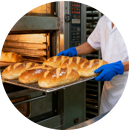
2. Sharp Reduction in Defect Rates: The defect rate caused by uneven color dropped from 12% to 1.3%, and the overall defect rate (including shape, texture, and color) was controlled below 2%. The produced toast features a uniform golden color, crispy crust, and soft interior, which has been highly recognized by customers. In the first three months after the new line was launched, the client’s sales volume increased by 43%, and product quality-related complaints decreased by 93%.
3. Enhanced Brand Image: With stable product quality and increased supply capacity, the client successfully established partnerships with 11 new large supermarkets in Accra and Kumasi. Its market share in Ghana’s Greater Accra and Ashanti Region toast markets increased from 8% to 15%, which boosting its brand influence in the local market and laying the foundation for expanding to other regions of Ghana.
This case fully demonstrates the core value of our full-automatic toast production line in addressing low efficiency and uneven product quality pain points for Ghanaian customers. By combining localized customization—adapted to Ghana’s power supply conditions, raw material characteristics, and climate—with advanced automation and precision control technologies, we help clients in emerging markets like Ghana improve production efficiency, reduce costs, and enhance product competitiveness. Ghana, as a stable economic growth engine in West Africa with close economic and trade cooperation with China, has huge potential in the food processing industry. In the future, we will continue to optimize our products based on the specific needs of different regions in Ghana, providing more professional and reliable bakery production solutions for local food processing enterprises and contributing to the upgrading of Ghana’s food industry.